Written for the Esplanade Dans Festival, 2015
Sylvie Guillem
From star dancer at the Paris Opera and Royal Ballets to contemporary dance icon, from croissant-and-charcuterie munching Parisian to vegan Eco-warrior, Sylvie Guillem has a penchant for reinventing herself.
The icon of classical ballet turned herself into one of the world’s most sought after contemporary dancers, performing works by the foremost neoclassical choreographers from Akram Khan to Jiri Kylian and Marice Bejart and paving the way the world to realise that there is life (and dance) for female ballerinas post-pointe shoes.
How did she do it? With an iron will and a straightforward inability to compromise the standards she set for herself, or anyone else – this is, after all, the woman who decried the ‘supermarket’ nature of ballet awards when she accepted her ‘World’s Best Ballet Dancer’ prize, called her former Royal Ballet director ‘stupid’ for alleged lack of artistic vision, and described her daily training as akin to ‘whipping oneself daily’ – a painful necessity to keep her supple body in prime dancing shape.
In 2013, at 48 years old, she declared she would retire at 50. And she did exactly that on the last day of December in 2015. She wouldn’t be Sylvie otherwise.
Pina Bausch
A slim wisp of a woman frequently clad in black, Pina Bausch may cut a fragile figure, but she is one of the most formidable people in the modern dance world. Wuppertal Opera Ballet, the company she helmed as artistic director was renamed Tanztheater Wuppertal Pina Bausch when it became so associated with her works, style and leadership.
It was the company that Bausch spent most of her years creating for and performing with until her death at the age of 68.
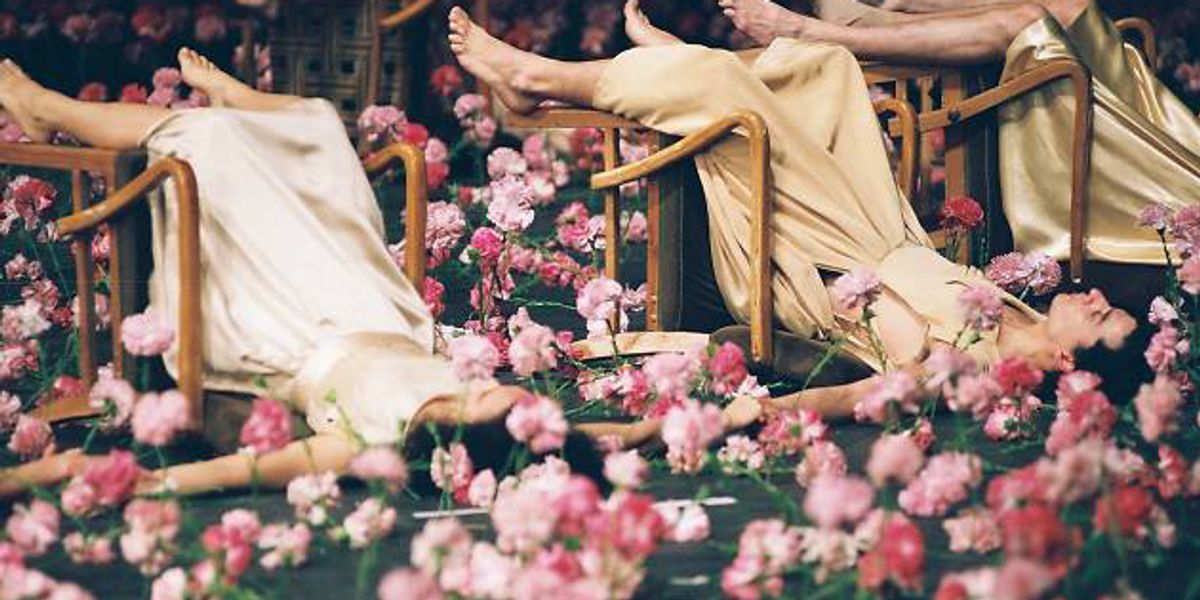
Bausch’s works are have a penchant for high drama, strangeness and spectacular – in Cafe Muller, most of the dancers perform with their eyes closed as they move amongst the chair-strewn cafe set, in Viktor, ballgown-clad dancers fly through the air on gymnastics rings. Vullmer required the stage to be covered in water and in Nelken, it is strewn with thousands of silk carnations. But at the heart of the surreal nature of Bausch’s world is an exploration of human emotions.
Moving about in these otherworldly scenes Bausch has dreamed up, her dancers explore relationships, gender roles, femininity, masculinity, fear, anger, pain, pleasure, love, youth, life and death.
Bausch herself danced in these pieces and never demanded from her company more than she asked of herself – that they not only be great dancers, but great actors, as they plumbed the depths of human emotion at every performance.
Sara Baras
Her crisp, intricate, stage-pounding footwork sets a emphatic, percussive rhythm unto itself on the stages she graces, accompanied by the silken strums of guitars and purring vocals. Flamenco queen Sara Baras certainly knows to make an entrance – and isn’t afraid to march to the beat of her own footwork.
She set tongues wagging in the late 90s when she and her sextet of female dancers appeared on London’s stages clad not in the traditional frills and foofaraw of traditional flamenco costumes, but in sleek tuxedo suits and trousers, and simple, stage-grazing frocks.
Her style of flamenco is not strictly traditional, but with the company she has founded and led for more than 20 years, Baras instead has the freedom to create and pursue new artistic avenues for flamenco dancing, infusing the dance form with a sense of high drama and theater while remaining true to its gypsy spirit.
Baras has performed for kings and queens, but watch the snap of her heels and the flick of her wrist, the intensity of her gaze as she strides across the floor, and you might feel that the true royalty is the lady onstage.
Rukmini Devi
Rukmini Devi has never been afraid to buck tradition. She caused waves among the conservative Indian society when as an upper-caste Brahmin Girl she married foreigner George Arundale, a British theopist.
But Devi didn’t stop there.
She was set to rock it further when, through the urgings of the famed prima ballerina Anna Pavlova, she started exploring Indian classical dance and fixated on Sadir, a dance form so taboo that it was considered a sin to study it. Devi persisted, not only learning the dance form, but overhauling it. By elevating it aesthetically and musically, and developing techniques and syllabus for students to learn it, Devi began a dance renaissance.
Sathir became known as Bharatnatyam, a nationally and globally recognised art form. Her students at the Kalakshetra academy and repetory company she founded continue her work today, studying and performing the dying dance form that Devi breathed life into.
Leave a Reply