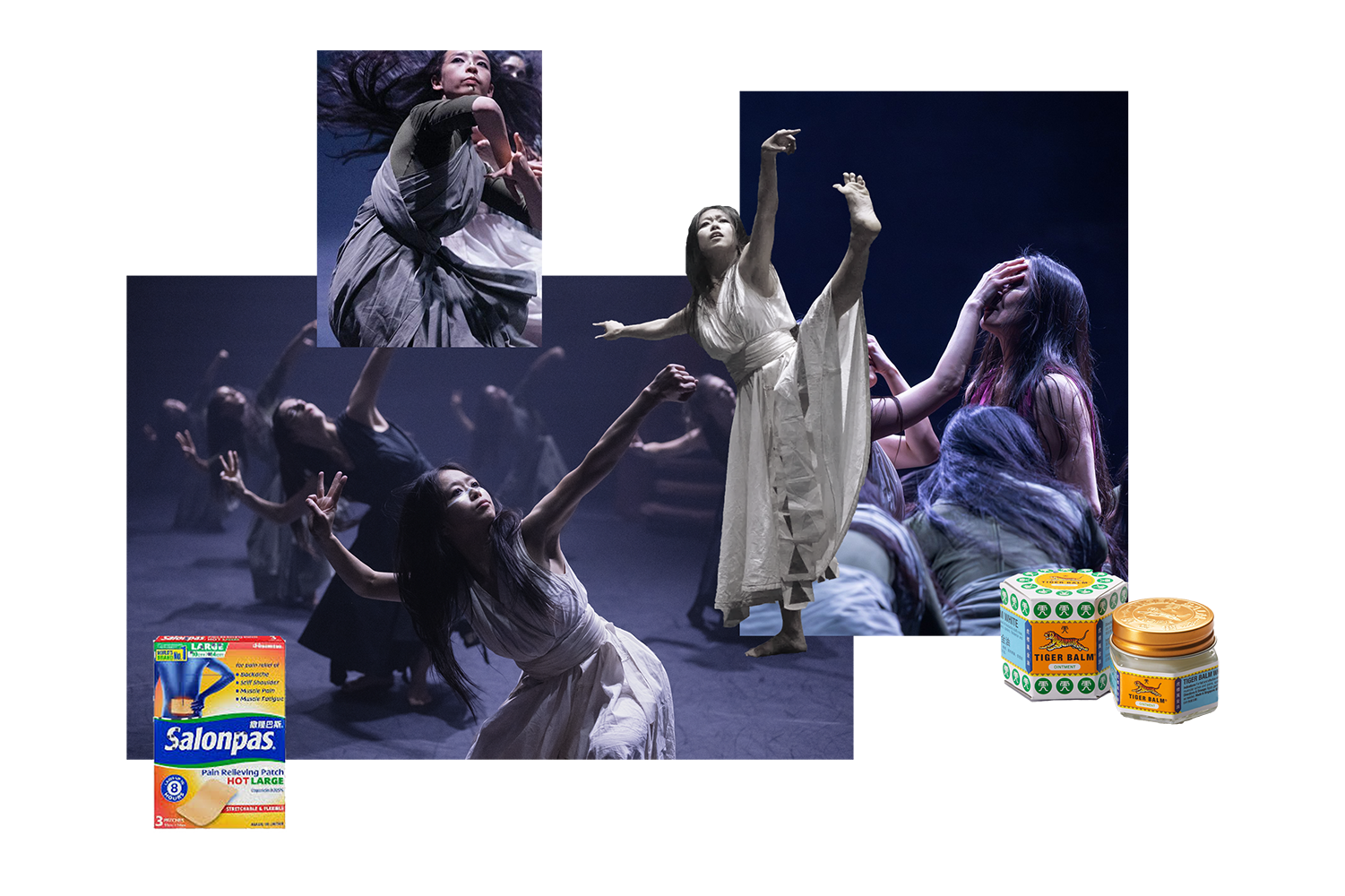
When I watched Night of Remembering (Théâtre de la Ville de Paris, October 2025), Iwas like woah! So intense! So visceral! So eerie! So back breaking! So much boomz haireography!
But I also felt a growing sense of unease of ‘wait the dancers are going to be doing this every day for [checks program notes] the next 3 weeks?’
‘THIS SHOW WAS SO GOOD BUT AKRAM’S DANCERS R U OK,’ I half jokingly posted afterwards on my instagram stories.
When I opened the app the next morning, I was surprised to see a similarly joking not joking reply from one of the dancers: ‘thanks for coming! No we are not ok but the physio is coming tomorrow.’1
Dance is tiring. Dance is hard. Like really fucking hard. The physicality is brutal, the industry is unkind, and you’d probably make not that much less (or maybe more) working at Starbucks.
So more often than not, dancers who reach and stay in the professional echelons are people who, well …they like their art, but they also really kinda like pain.
‘I’m actually looking forward to it,’ a dancer at the English National Ballet once said to me when the subject of their infamously gruelling, last-man-standing coliseum season came up. ‘It will be my first coli season and it feels like a rite of passage.’
Dancers are the front face of any company, the stars of any show but let’s be real – they are also the lowest common denominators. They are bodies that must dutifully be transformed into whatever a choreographer envisions.
And it feels like choreography that is so consistently brutal and programs designed to be unrelentlessly demanding take advantage of that.
Why, for instance, have a ballet triple bill that requires dancers to move between extremities of technique and style – classical to contemporary to neoclassical, and that is so taxing that dancers cannot feel their legs by the end.
(A doctor for the Paris Opera Ballet once told me. ‘Injuries always go up when the dancers have to transition from classical to contemporary’)
“The Akram is amazing and you should watch it,” I texted a friend who danced in one of his full length works. ”But also how on earth are they dancing like this every show?”
“That’s Akram,” she replied. “I think he kind of expects everyone to dance like him. Dancers…they either like him or they don’t.”
“I like him, he’s great, people just don’t get him,” said a friend who later became a répétiteur for him.
“I hate him, he’s an ass and I never want to work with him again,” said another.
It’s a strange thing, to feel like you have to keep propagating the brutality of the experiences that you went through. I’ve heard of artistic directors who expect dancers to perform through injury – they did it so you have to as well.
I think any dancer accepts that they will, at multiple points in their career, have to push their body to the limits as a condition of their job. Art doesn’t advance without the exploration of where the boundaries are, and how to break them. But that break isn’t and shouldn’t always be physical.
If this was maybe one weekend of performances, go ahead, there’s room to physically go ham. But 15 shows in 18 days on the first leg of a tour, maybe we should rethink that.
“That’s why I loved working with Crystal Pite,” someone once told me. “She is always considerate of her dancers. The process feels collaborative.”
To be fair, not all of Akram’s pieces are this insane.
“All we do in the second act is bourree, it’s so boring.” a ballerina once said about the second act of his retelling of the classical ballet Giselle.
“Yeah I get it, but it works.” I told her. I’d watched it 5 times in 3 cities and never once felt bored.
Because isn’t it is a type of failure on the part of a choreographer or director if they have to consistently rely on bigness, the sensational, and the brutalizing of bodies to create watchable work.
‘Do it for the art,’ they might say. But um I checked with the art it didn’t actually say anyone needs to do it for them because it’s a non-sentient genre.
It’s also a failure of audiences, if we expect performers to metaphorically martyr themselves show after show for our entertainment.
Thoughtfulness and restraint may be the harder path, but that is exactly why it can result in some truly compelling, creative work.
- I have over 60,000 followers on my work instagram – this is not a flex it’s just to explain why Akram’s dancers saw the story and replied me they do not randomly go around scouring instagram to see if anyone saw their shows. ↩︎
Leave a Reply