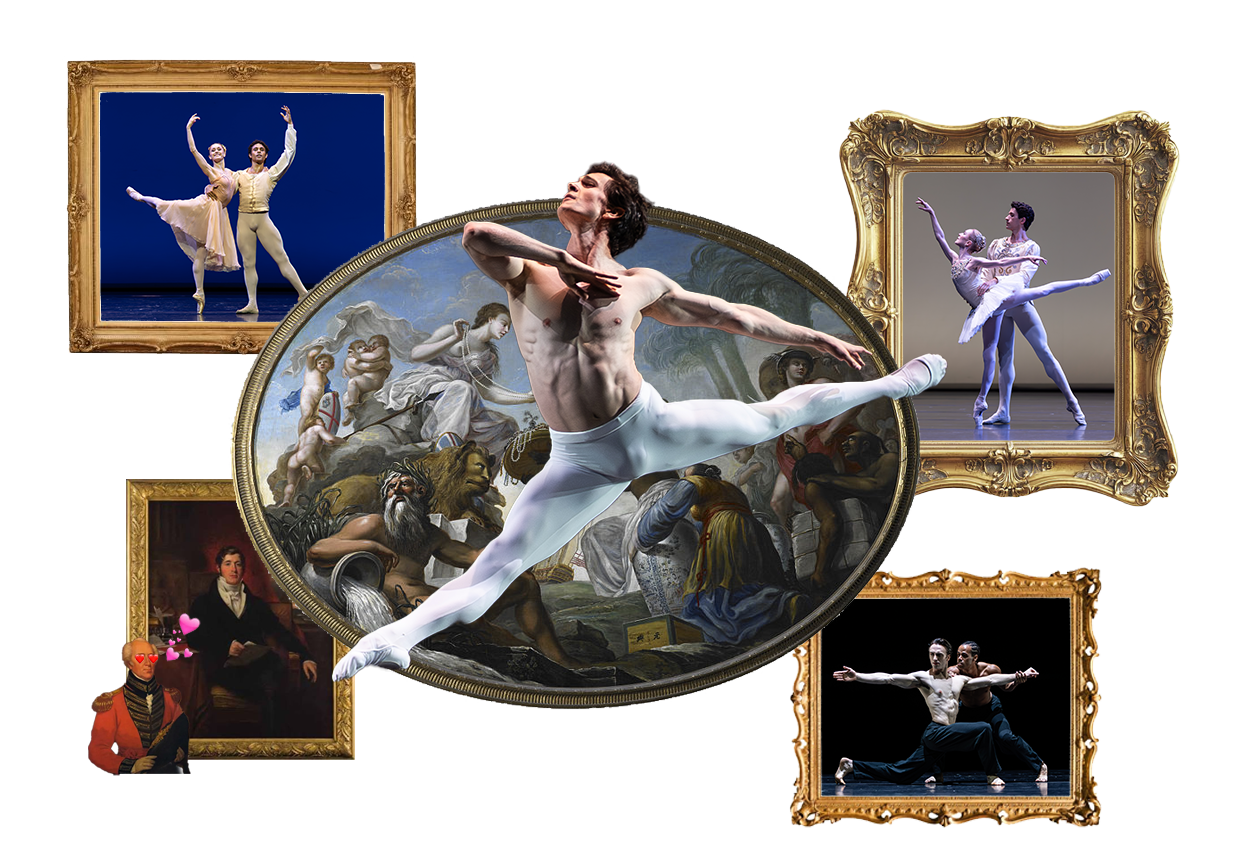
The Royal Ballet Gala, Esplanade 2026
The Royal Ballet’s return to Singapore has been widely anticipated, and rather than sell several kidneys and someone’s first born child to bring in one of their full length productions – not in this economy! – Esplanade astutely opted for a gala format, featuring a leaner slate of the Royal’s top dancers.
I was invited me to watch the full dress rehearsal because despite having absolutely no turnout, I am apparently some kind of ballet #INFLUENCER.
Marianela Núñez, Cesar Corrales, Melissa Hamilton, Matthew Ball, Mayara Magri… this was probably the ballet equivalent of getting to see the Spice Girls and One Direction perform together onstage.
It is unfair to comment on the dancing in a dress rehearsal – many of the artistes were rightfully conserving their bodies for the actual performances.
But despite circumstances, it was clearly evident that these were dancers who had total mastery of their bodies – there were graceful splits! Dazzling high kicks! Twirling pirouettes! And a perfect arabesque!
This was technical and artistic prowess rarely seen that puts the Royal at the top echelons of ballet companies — emphasis on ballet, as the artistes weren’t fully able to divest themselves from the classical forms and stylings when moving through contemporary work.
However, in the Year of Our Lord 2026, one would hope that the Royal in Royal Ballet now stands for royally good dancing, not GREETINGS SUBJECTS ‘TIS I COME TO RULE OVER THE REALMS AND PURPORTEDLY SCATTER LARGESS ON THE COLONIES WHILE FUNNELING YOUR RESOURCES TO MY KINGDOM.
But this was a program featuring 15 dance works, all by white male choreographers, set to music by white male composers. And it showed.
Pas de deux from Romeo & Juliet, Swan Lake, Le Corsaire, when danced out of context of a full length narrative laid bare how conventionally predictable the vocabulary, pathways and entrenched gender roles of classical ballets were.
For the lady, perhaps a dainty, controlled passe développé à la seconde leading inevitably into an arabesque, performed with lovelorn, hapless, yearning.
Meanwhile the men were given carte blanche to indulge in power as they lifted and leapt – whirling out revoltades and grand jetés en tournant en manége, or a series of entrechat six in Giselle so extra it was practically smothered in onions with extra garlic.
“I think my favourite work was [the contemporary piece] Spells,” said a friend who almost exclusively prefers classical ballet.
Choreographed by Joshua Junker, Spells was probably the most current and dynamic piece in the lineup. But Junker hasn’t quite yet figured out how to explore beyond the borders of Western contemporary/modern dance pedagogy, or play with them in new ways – it was a decent proffering, but conventional.
His was also part of a line of contemporary pieces created exclusively through the white male gaze, largely heralding the Adonis-like bodies of very fit very abtacular not-always-dressed-in-very much male dancers.
An excerpt from Wayne McGregor’s Chroma, performed by a trio of (surprise!) men, seemed dated – lines and rigidity. It’s easy to see how this was revolutionary when it first premiered, but it now felt reminiscent of an era where the ‘contemporary’ in “contemporary ballet” still had to be servant to ‘ballet” as master1.
It all seemed a bit as if we’d gone back in time to when Raffles and Farquhar (if they were two besties who were maybe also very very close roommates) stepped off the boat, strapped on their ballet shoes and dance belts and said WHAT HO SANG NILA UTAMA YOUR BENEFACTORS COMETH AND DEIGN TO GRACE YOUR STAGE WITH OUR HIGH ARTS. AND ALSO YES WE ARE VERY VERY CLOSE ROOMMATES JUST ROOMMATES FYI DEFINITELY TOTALLY NOTHING MORE. BUT VERY VERY CLOSE.
The gala closed off with George Balanchine‘s Tchaikovsky pas de deux performed by Patricio Revé and Marianela Nuñez – the latter in her famously sparkling, prodigiously magnetic form even when not dancing full out.
It was a fitting encapsulation of the program – dancing of the highest quality, in a creation by a choreographer who exerted infamous amounts of control on his female dancers – demanding that they be long necked, tiny headed and very skinny, and that they stay unmarried and childless for their careers even as he slept with them.
Dance is woman, Balanchine said. But what were women to him? Machines, artistic fodder – the tools of his trade, as he once called them2.
If ballet is presented only through the white male lens, we limit the ways the art can grow. Because we limit the kind of people who can grow it to only one particular subset, and because we condition audiences to believe that this is how ballet should be.
And then dance becomes staid, predictable and…to be frank, really boring.
Ballet needs diverse people of different cultures and backgrounds to tell stories through movement – perspectives and lived experiences that white men simply are unable to tell.
Think of Akram Khan’s Giselle, created for the English National Ballet, a crowd-pleasing work that reframes the classical ballet through the lens of class divide and immigration as it marries Indian dance and ballet.
Or former Royal Ballet resident choreographer resident Charlotte Edmonds (once ironically “assessed out” of the Royal Ballet school due to her body type), whose style melds ballet and sinuous flow with street dance as she probes and platforms concepts such as mental health and gender – both the feminine and non-binary.
There is need, space and appetite for these stories. Would that some were shared onstage that night.
I mean, Royal Ballet – if you’re in post-colonial Singapore…why is everything so white?
[Photos by: Bernie Ng, courtesy of Esplanade – Theatres on the Bay]
Leave a Reply